
Tommy Lee’s Recording Studio
Step into the sonic sanctuary of Tommy Lee’s new recording studio, a masterpiece of acoustic design and aesthetic innovation by Russ Berger Design Group. Tailored to fuel creativity, this state-of-the-art space merges cutting-edge technology with world-class acoustics, offering an environment as dynamic and bold as Tommy Lee himself. From its seamless workflow to its jaw-dropping visual appeal, the studio is a testament to the power of precision and artistry in studio design. (continue below)
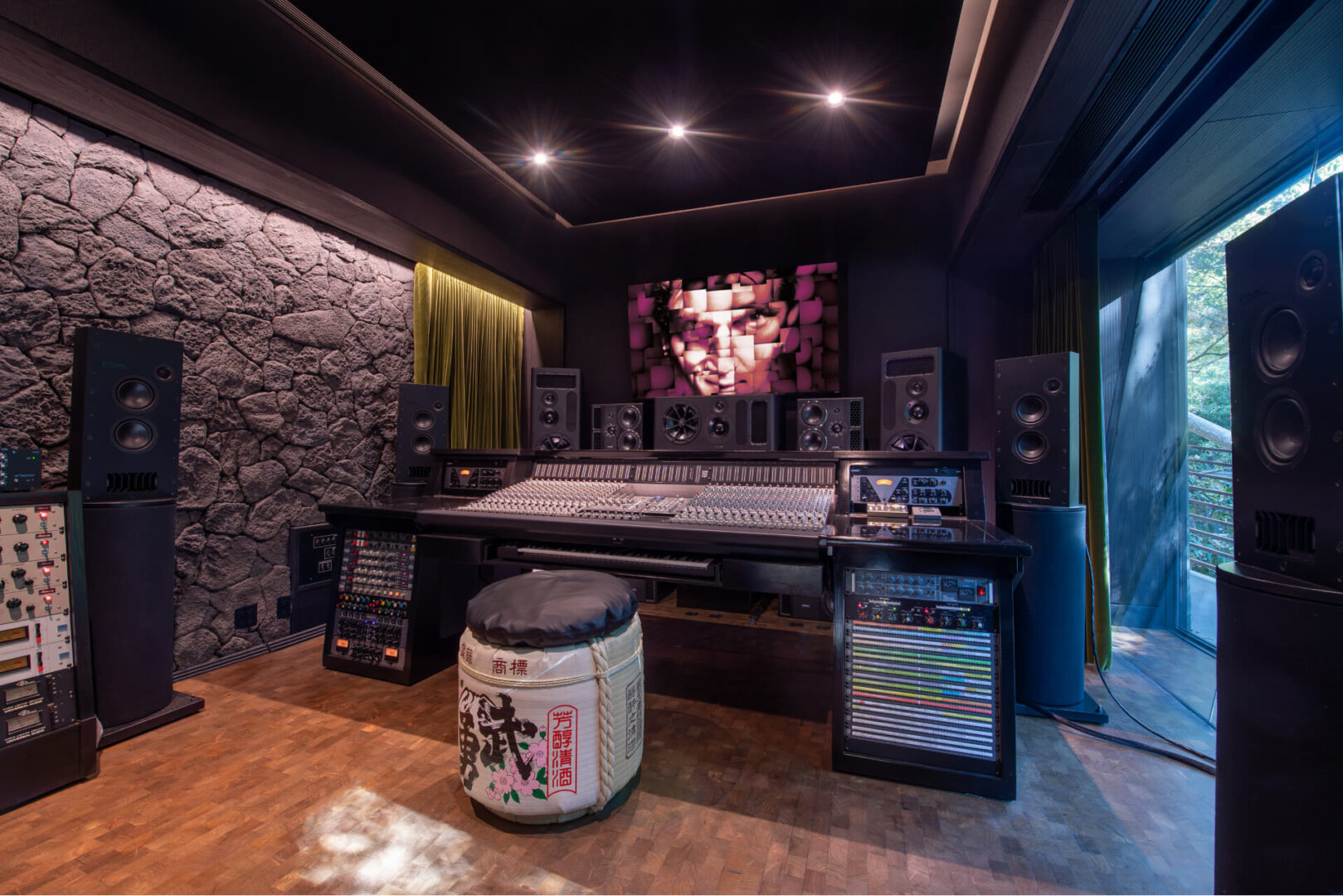
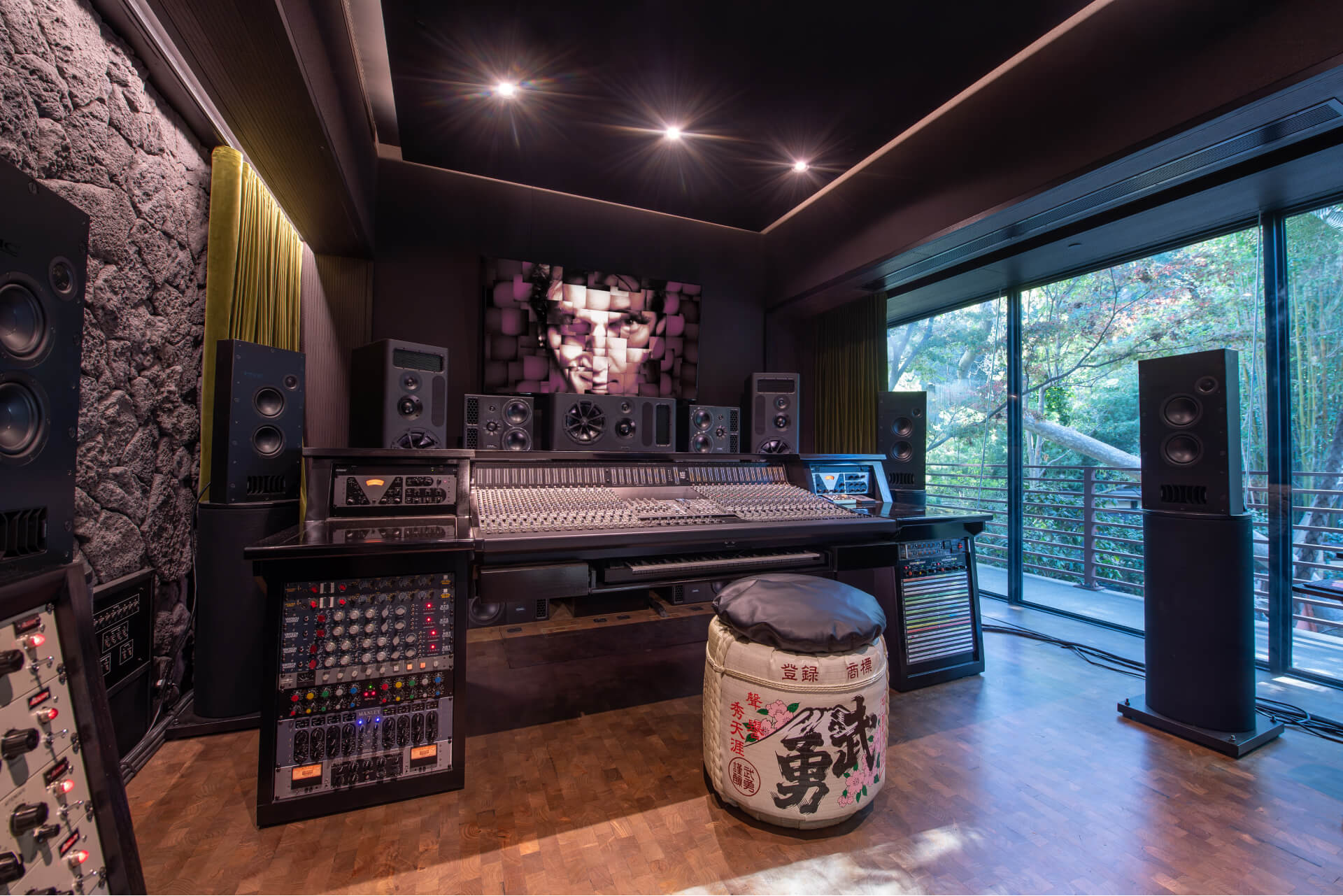
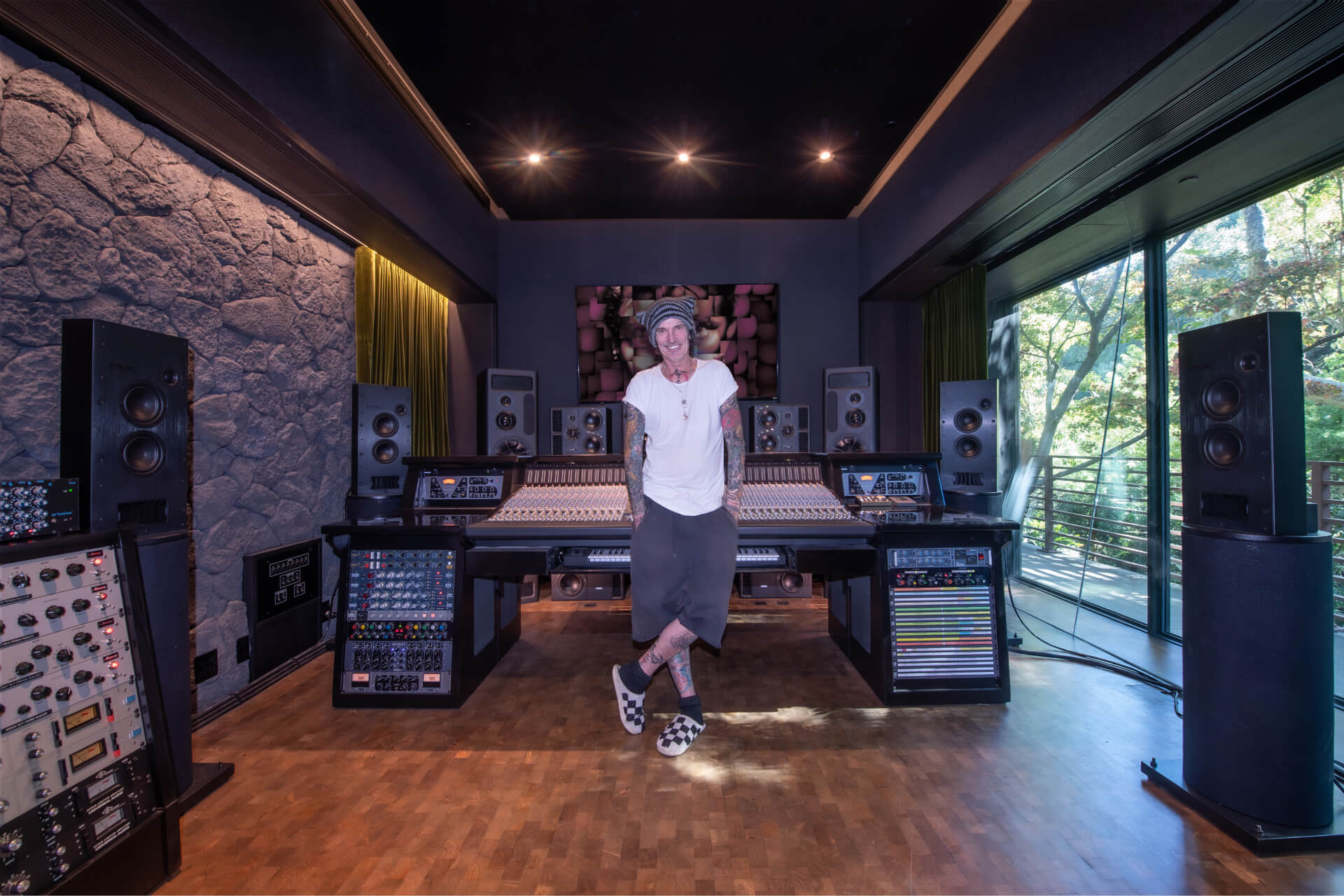
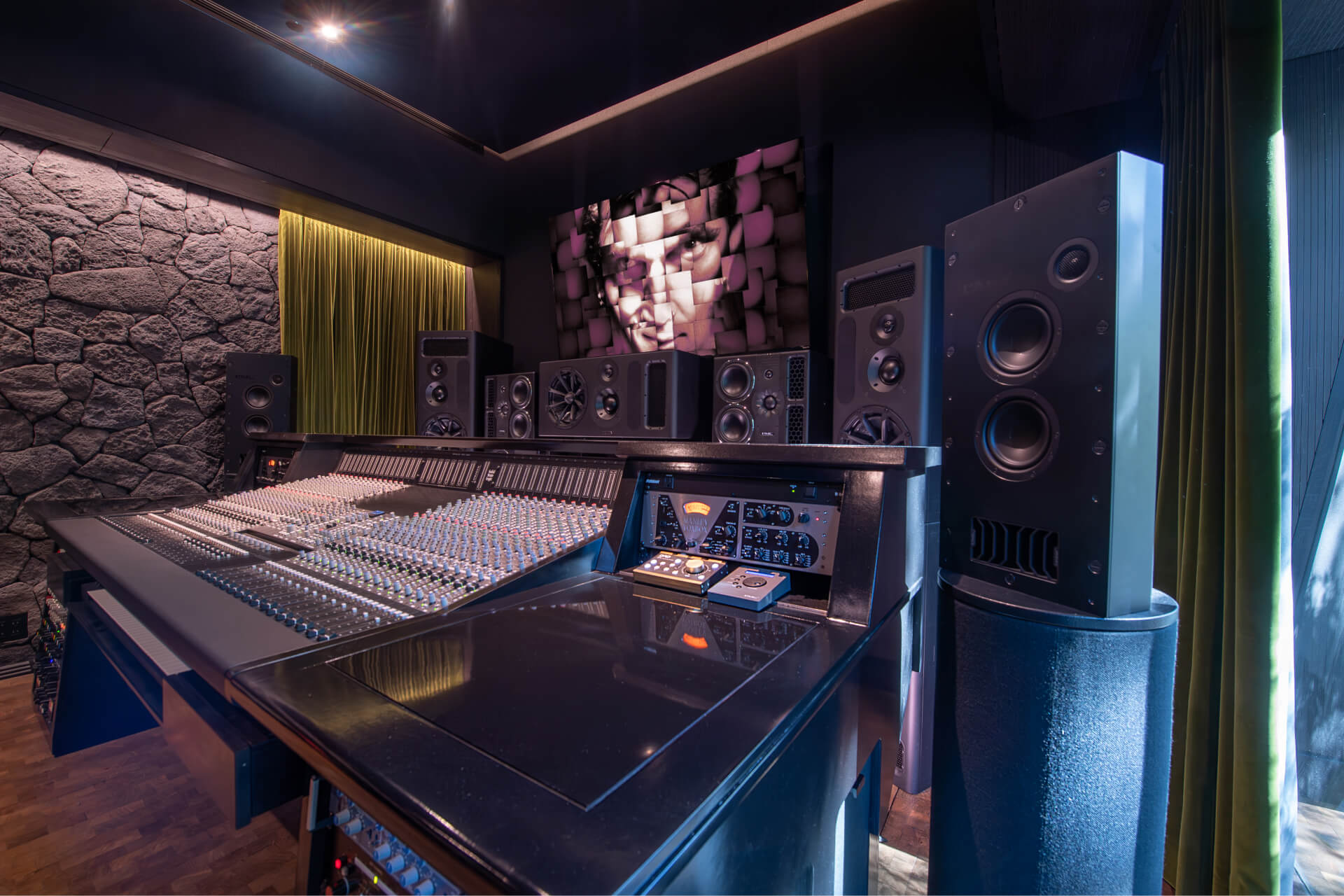
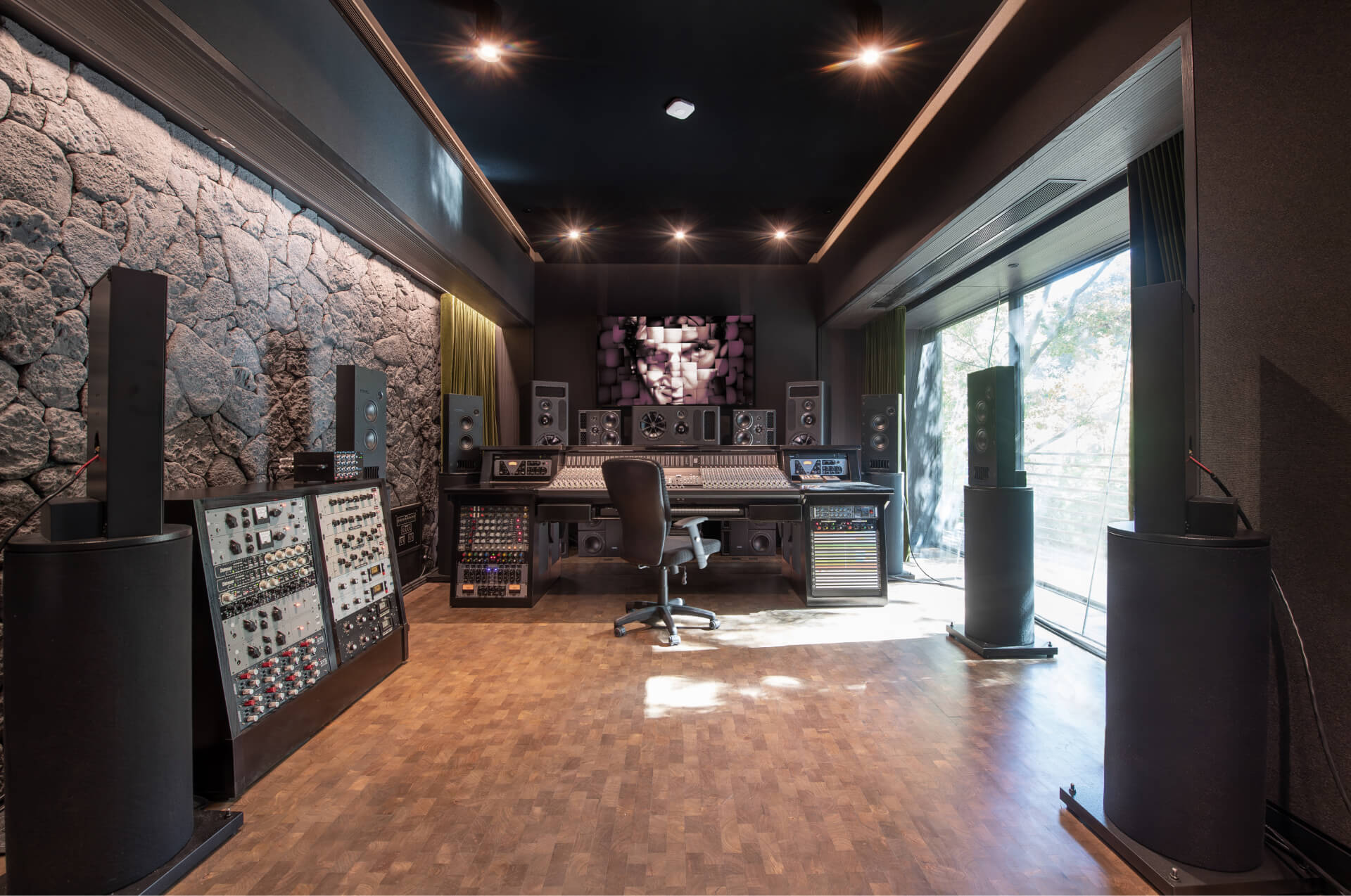
When Tommy first reached out to the team at RBDG, he wanted a space would not only reflect his current diversities as a producer and recording artist but also allow for current production trends in recorded music.
This new room would be built alongside a massive renovation of a 1960s home that Tommy and his wife Brittany had recently purchased. Perched just outside the Hollywood Hills, the residence sits along a beautiful hillside facing an expansive Japanese garden and coy ponds. The objective was to take an existing covered porch area that was cut out underneath the main house facing the gardens and convert it into Tommy’s new recording studio and writing area.
Tommy’s goals were simple yet complicated: He wanted a space where he could write, record (which means record drums), mix for stereo and mix for Dolby Atmos. This meant dealing with content that would generate high SPL at a very broad frequency range, all within 650 square feet of allotted space. An aggressive goal, but obtainable through careful thought and clever design.
On the left side of the mix position, is a pumiced, volcanic rock, which would acts as absorption but also aesthetically ties into the Japanese feel from the neighboring gardens below. For some additional absorption and low-frequency trapping, some acoustical theater drape was deployed throughout the room on a remote track that could be controlled from a panel at the rear of the room.
Floating construction was implemented to isolate the space from the rest of the house, and everything was wired back to a common machine room, which was separate and on the other side of the front wall. That room also serves as the rack room for the automation in the rest of the home. This, along with the cable runs we placed inside the concrete floor, eliminated the need for redundant cable throughout the studio and the rest of the house. The lesson here was work smarter, not harder. Finally, a custom end grain floor added a nice warmth to the studio space and all the gear to come.